

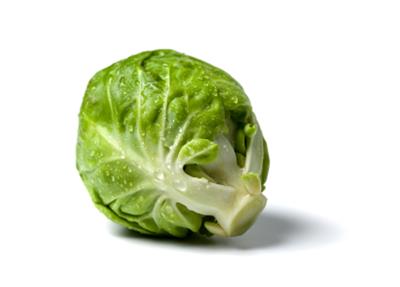
Brussels Sprouts are a member of the cruciferous family of vegetables (which includes broccoli, cauliflower, cabbage and kale) and are named after the city in Belgium where they were first referenced in the 1200s – Brussels!
They are an extremely nutrient-dense food - providing you with 20 essential vitamins and minerals. Top of the list are vitamin K and vitamin C but they are also a great source of fibre, riboflavin, magnesium, and phosphorus as well as vitamins A and B6, thiamin, folate, potassium, and manganese, copper, calcium, and iron. With the added benefit of being low in saturated fat and cholesterol it's no wonder they're referred to as a superfood!
Why you should eat them!
- vitamin C is a powerful antioxidant.
- vitamin A supports healthy eyesight.
- vitamin K is intrinsic to the blood’s ability to clot.
- vitamin content keeps your skeleton strong because of the vitamin C, a nutrient you need to make the collagen abundant in bone tissue, and vitamin K, a vitamin that promotes bone mineralization.
- folate bolsters red blood cell health and is important to pregnant women as it helps prevent specific neural tube defects.
- brussels sprouts are a rich source of potassium which can help regulate your blood pressure and fluid balance.
- fibre protects the health of your colon, prevents constipation and contributes to lower cholesterol.
Anti-Inflammatory and Powerful Antioxidants
Brussels sprouts are also very important for their antioxidants and phytochemicals, which have been proven to fight chronic disease.
Not only do Brussels sprouts contain well-known antioxidants like vitamin C, but also others that are much less known but equally as important, like kaempferol, isorhamnetin, caffeic and ferulic acids, and a fairly rare sulfur-containing compound called D3T (3H-1,2-dithiole-3-thione).
This means that once consumed, Brussels sprouts help the body to ward off chronic oxidative stress, which is a major risk factor for many types of chronic diseases.
At the same time, Brussels sprouts’ anti-inflammatory compounds will combat chronic inflammation in your body, another risk factor for chronic disease. Indole-3-carbinol (I3C) is also anti-inflammatory and it operates on a genetic level, helping to prevent inflammatory responses at the very early, initial stages of disease development. It’s due to Brussels sprouts’ anti-inflammatory properties that they may also offer benefit for heart problems, including heart attack and atherosclerosis.
Tips to jazz up your sprouts!
You may be part of a large portion of the British population who deem Brussels sprouts to be rather bitter and a bit smelly but treat them right and they're actually delicious. If your Brussels Sprouts do become overly smelly, mushy, or turn a muted green they’re probably just overcooked - simple to fix!
Here's some kitchen inspiration:
- steam Brussels sprouts and toss them with olive oil, Parmesan cheese, or butter.
- roast them and quarter them, then toss them like a salad with onions, feta cheese, and balsamic vinegar.
- try serving steamed Brussels sprouts as a side dish with a honey mustard or cheese sauce, or roasted and tossed together with toasted pine nuts, freshly grated Parmesan cheese, olive oil, and balsamic vinegar.
- add flavor to your sprouts by using fresh herbs, such as rosemary or basil.
- alternatively, eat the sprouts raw - simply combine thinly sliced brussels sprouts with chopped kale and a vinaigrette, or mix chopped brussels sprouts with broccoli florets and chopped cooked sweet potato.
Or you can even just keep a bowl in the fridge, seasoned with salt and pepper, to snack on throughout the day. They're the perfect for popping in your mouth!

